Lately I have been thinking about this odd transitional period a lot, and how those who were just infants at the time - I am thinking of one man in particular here - would love nothing more than to go back to it - in essence, to return to a time when the 60s weren't "the sixties, man." It was a time of sharp suits, of short haircuts, of business and commerce, an utter squareness that was at the same time vastly ambitious and, while willing to nod towards the idea of a generation gap, didn't think it was anything that couldn't be remedied through some careful grooming, etiquette lessons and practice, practice, practice. In short, this is showbiz - the hot spotlight, the gloved-and-pearled upper level seats, the big orchestra in the pit, the works. (The show Mad Men starts in this time, and its popularity alongside the X Factor and various Idols may or may not be a coincidence.)
You might think Duane Eddy is a long ways away from all this, and in his utterly committed way he makes showbiz look a little...flashy. (Have Twangy Guitar Will Travel speaks more of his country background and Arizona pal/producer Lee Hazelwood than his actual New York City roots.) Even if this, the theme song to the movie Because They're Young is relatively slick, it still has that pioneering what-the-hell rock 'n' roll vibe to it, Eddy's guitar as ever the sonic equivalent of that long, cool look - of interest? of provocation? - that made him so popular in the first place. Music for people who are getting down to do something, as opposed to music that is merely about presenting something in order to...present something. Who knows how many people listened to this and his other songs and were not just interested but compelled to find a guitar and learn how to play it? In the field of music, it is the artistry that lasts, far beyond anything else; it is the heart, for lack of a better word, that gives young people courage. Not the businessman's idle pleasure, as he plots an even bigger version of something that is, in itself, already exaggerated.
Friday, December 18, 2009

Monday, December 14, 2009
Someone Who'll Be There: Connie Francis: "Mama"/"Robot Man"
A double 'A' side is a strange thing to a North American (or, at least this one), but it is acceptably common in the UK; it is an odd thing to think of both sides of a piece of vinyl as being the 'main' one, but if this idea is strange then it also can lead to some pretty damn awesome works of art; and I propose that this one, the first one, is a good example of that.
"Mama"/"Robot Man" are the two quite different sides to a girl (Francis, nee Franconero, was all of 21 when they were recorded) who is just starting to feel the pulls between the past and the future, all while negotiating the sometimes turbulent now. "Mama" is a string-intensive ballad from the original Italian; it begins in English and then seamlessly goes into Italian (it is from her album Connie Francis Sings Italian Favorites). It is a heart wrenching song about missing one's mother, a song any daughter who misses her mom can understand in either language; here is the main part in Italian:
"Quanto ti voglio bene
Queste parole d'amore
Che ti sospira il mio cuore
Forse non si usano piu
Ah Mamma
Ma la canzone mia piu bella sei tu
Sei tu la vita e per la vita non ti lascio mai piu..."
I am sure that this got the okay from Francis' rather overprotective father, who forbade her marrying Bobby Darin to the point of chasing him out of his own house with a gun. (Who could dislike Bobby Darin?) Whether he approved of the other song is something to ponder, as it is almost entirely the opposite song, in that she is looking for a boy...no, erase that, a robot for a partner. "Robot Man" is the unlikely but true origin for all other songs wherein a woman longs for a steady and utterly loyal companion, from "Automatic Lover" by Dee D. Jackson to "Robot Song" by Margaret Berger. (Hmm, come to think of it, maybe Connie's dad would have preferred a robot to a real guy; but let's concentrate on the song.) Here, instead of her usual 'sobbing' style (a style hers & hers alone; a style that is perhaps symbolic of the whole young woman trapped in the 50s and yearning to get to the 60s, if only because the 60s must mean something different) she sings in a rough style about how she wants a man who is so nice "He'd never dance with anyone but me/I'd just have to wind him with a robot key" because she "Don't want a real live boy, they give me grief/Always make me cry into my ha-andkerchief/So it's a robot man I'm dreamin' of/Because I can depend upon a robot love, yeah!" Even though this is a song that is in jest, it feels only half in jest; you get the idea that Connie has had enough of scoundrels & cads and really would settle for a electronic hunk of metal.
The greatness of having these two songs as, in essence, one song is that the extreme longing for the past and the longing for an improbable future are in the balance; missing her mother (who may or may not be dead; it's hard to tell) and wishing for a man who has a similar reliability sans emotions is about as full a statement on the human condition as we, dear reader, have encountered here so far. Not only that, but they foreshadow a similar double a side that will be, for many, the apex of the 60s; two songs that also deal with the past as it was and perhaps never was and never could be.
"Mama"/"Robot Man" are the two quite different sides to a girl (Francis, nee Franconero, was all of 21 when they were recorded) who is just starting to feel the pulls between the past and the future, all while negotiating the sometimes turbulent now. "Mama" is a string-intensive ballad from the original Italian; it begins in English and then seamlessly goes into Italian (it is from her album Connie Francis Sings Italian Favorites). It is a heart wrenching song about missing one's mother, a song any daughter who misses her mom can understand in either language; here is the main part in Italian:
"Quanto ti voglio bene
Queste parole d'amore
Che ti sospira il mio cuore
Forse non si usano piu
Ah Mamma
Ma la canzone mia piu bella sei tu
Sei tu la vita e per la vita non ti lascio mai piu..."
I am sure that this got the okay from Francis' rather overprotective father, who forbade her marrying Bobby Darin to the point of chasing him out of his own house with a gun. (Who could dislike Bobby Darin?) Whether he approved of the other song is something to ponder, as it is almost entirely the opposite song, in that she is looking for a boy...no, erase that, a robot for a partner. "Robot Man" is the unlikely but true origin for all other songs wherein a woman longs for a steady and utterly loyal companion, from "Automatic Lover" by Dee D. Jackson to "Robot Song" by Margaret Berger. (Hmm, come to think of it, maybe Connie's dad would have preferred a robot to a real guy; but let's concentrate on the song.) Here, instead of her usual 'sobbing' style (a style hers & hers alone; a style that is perhaps symbolic of the whole young woman trapped in the 50s and yearning to get to the 60s, if only because the 60s must mean something different) she sings in a rough style about how she wants a man who is so nice "He'd never dance with anyone but me/I'd just have to wind him with a robot key" because she "Don't want a real live boy, they give me grief/Always make me cry into my ha-andkerchief/So it's a robot man I'm dreamin' of/Because I can depend upon a robot love, yeah!" Even though this is a song that is in jest, it feels only half in jest; you get the idea that Connie has had enough of scoundrels & cads and really would settle for a electronic hunk of metal.
The greatness of having these two songs as, in essence, one song is that the extreme longing for the past and the longing for an improbable future are in the balance; missing her mother (who may or may not be dead; it's hard to tell) and wishing for a man who has a similar reliability sans emotions is about as full a statement on the human condition as we, dear reader, have encountered here so far. Not only that, but they foreshadow a similar double a side that will be, for many, the apex of the 60s; two songs that also deal with the past as it was and perhaps never was and never could be.
Tuesday, December 8, 2009
Lifting Me Higher: Guy Mitchell: "Cloud Lucky Seven"
Let us stop for a moment, dear reader, to look back to 1953. I say this not just because, having gotten our feet wet in the beginning of 1960 (we are currently just in June, about to jump straight into summer) things are starting to look...different around here, but apparently I missed a number two. (According to the big book at home I did, and I always go by it.) It is salutary, however, to pause here and see how far we have come.
And in the Christmas of '53 charts, who but Guy Mitchell is there, warm smiling Guy, extolling the various levels - dare I say chakras? - of love. The whole setting is one of joy (it's never just Guy, he always has a chorus) and a vivid sense of love being one exaltation after another, until cloud seven is reached, where you and your loved one are walking on air (after having passed through the other six (five and six is when "your heart bumps and kicks"; I am guessing that the heart leaps and bounds at seven, but he doesn't say). The communal joy of "When you're in love, when you're in love, when you're in love" is simple, even a bit homespun, but has (like the previous song) a certain unmistakable truth. At first you feel like singing, then you hear bells ringing (and yes, bells do ring when you are in love, and they keep ringing, trust me). The utter strangeness of love - and I mean how it can just happen - is introduced before any of these levels with the heartily sung "There's no way that you can detect it/It can happen when you least expect it." In fact I would argue that just about anything worth experiencing is, paradoxically, undetectable and unpredictable. There is no way of knowing, nod Guy and his pals, and before you know it you and your lad/lass will be near heaven as two people can be.
What a contrast to the growing...sophistication we are seeing already, and the other worldliness of, say, I Hear A New World by Joe Meek, out in May of 1960 as an EP, a work pretty much unthinkable in '53. More leaps and bounds of the heart and technology are to come, dear reader, but I think I have finally done with the 50s...for now...
And in the Christmas of '53 charts, who but Guy Mitchell is there, warm smiling Guy, extolling the various levels - dare I say chakras? - of love. The whole setting is one of joy (it's never just Guy, he always has a chorus) and a vivid sense of love being one exaltation after another, until cloud seven is reached, where you and your loved one are walking on air (after having passed through the other six (five and six is when "your heart bumps and kicks"; I am guessing that the heart leaps and bounds at seven, but he doesn't say). The communal joy of "When you're in love, when you're in love, when you're in love" is simple, even a bit homespun, but has (like the previous song) a certain unmistakable truth. At first you feel like singing, then you hear bells ringing (and yes, bells do ring when you are in love, and they keep ringing, trust me). The utter strangeness of love - and I mean how it can just happen - is introduced before any of these levels with the heartily sung "There's no way that you can detect it/It can happen when you least expect it." In fact I would argue that just about anything worth experiencing is, paradoxically, undetectable and unpredictable. There is no way of knowing, nod Guy and his pals, and before you know it you and your lad/lass will be near heaven as two people can be.
What a contrast to the growing...sophistication we are seeing already, and the other worldliness of, say, I Hear A New World by Joe Meek, out in May of 1960 as an EP, a work pretty much unthinkable in '53. More leaps and bounds of the heart and technology are to come, dear reader, but I think I have finally done with the 50s...for now...
Monday, December 7, 2009
Rock Your Baby: Johnny Preston: "Cradle of Love"
When I saw that I had to write a post about the follow-up to, of all things, "Running Bear" by Johnny Preston, I was not exactly surprised nor thrilled; this is exactly the kind of song that is a big hit, then gets forgotten by and large and is later revived years later by people who remember it in the first place, mainly by rockabilly fans, who were called Teddy Boys in the UK.
Why does this song affect me so? It's not because it's all that sophisticated - the cradle of love is something, however, that is located at first in a tree, which reminds me more than forcibly of a dream I once had...
...a dream where I was in a tree and it was night, still and cool and black, springtime; and I was up in the tree in what seemed to be a bed. I was alone, but I knew I wasn't going to be alone for long, as under the moon (which gave off enough light, without being full) I could see someone determindedly coming towards me, walking along what seemed to be a rather twisting path at times. But mostly I remember being in this bed in the treetop, the very light breeze and sense of something about to happen...
Which means I have to go all Paglia here and say that while this nursery rhyme song seems all trite and cliche and obvious at first, it does hit on some truths that are fundamental, or at least are fundamental if you grow up knowing these rhymes. I may not appreciate the last verse wherein Jack pushes Jill into said cradle of love (but this is 1960, when women were women, men were men and so on) - but the rocking and rocking in the cradle is an essential thing for people their whole lives it seems, and while a cradle in a treetop might seem, well, dangerous, being in love is a huge leap as well, in some cases not just a figurative leap but a literal one. And it is always a leap worth making, as my subconscious mind more than told me in the spring of 2005.
Why does this song affect me so? It's not because it's all that sophisticated - the cradle of love is something, however, that is located at first in a tree, which reminds me more than forcibly of a dream I once had...
...a dream where I was in a tree and it was night, still and cool and black, springtime; and I was up in the tree in what seemed to be a bed. I was alone, but I knew I wasn't going to be alone for long, as under the moon (which gave off enough light, without being full) I could see someone determindedly coming towards me, walking along what seemed to be a rather twisting path at times. But mostly I remember being in this bed in the treetop, the very light breeze and sense of something about to happen...
Which means I have to go all Paglia here and say that while this nursery rhyme song seems all trite and cliche and obvious at first, it does hit on some truths that are fundamental, or at least are fundamental if you grow up knowing these rhymes. I may not appreciate the last verse wherein Jack pushes Jill into said cradle of love (but this is 1960, when women were women, men were men and so on) - but the rocking and rocking in the cradle is an essential thing for people their whole lives it seems, and while a cradle in a treetop might seem, well, dangerous, being in love is a huge leap as well, in some cases not just a figurative leap but a literal one. And it is always a leap worth making, as my subconscious mind more than told me in the spring of 2005.
Wednesday, November 25, 2009
His Word May Be His Bond: Adam Faith: "Someone Else's Baby"
Although the 50s were many things, there was one thing they don't tend to be called that much - hip. There were hipsters back then, to be sure, but the 60s developed its own kind of hipness fairly quickly - one that was still at this point tethered to the 50s, but evolving out of it at a rapid rate.
We are still in the Age of Meek, to be sure, but now the Age of Barry has arrived, with all that implies. John Barry did the arrangements for this song and their pizzicato insouciance is miles away from the four-square hog-calling no-need-for-microphones from the previous decade. Faith sings this song with a grin in his voice and a very Buddy Holly "bayyyyehby" on his mind (not to mention his pronunciation). Lyrics like "I wonder who's in the loveseat/Who's got a heartbeat, like thunder" sounds as if Meatloaf is just around the corner; "If I acted bad/I could steal his fairy queen" on the other hand, is just so English as to be nearly a cliche. It's a song about wanting another guy's girl, stealing her practically from his arms - being a cad or a knave, at the least, but Faith makes it sound as if he just can't help himself and is going to be a love opportunist and have his tryst in his lovenest (or backseat) because he can't resist the idea of doing the act in the first place. Would Cliff ever be so bold? Faith was one of his rivals in the teen idol stakes, but unlike Cliff he left to get into acting, financial dealings and music production once the age of the guileless idol was over. Not bad for a kid from east London who was in a skiffle band called The Worried Men; hard to think of Faith as worried about anything at all here, save for (maybe) being caught.
(I feel it incumbent upon me to mention that the great inheritor of Faith's romantically helpless opportunist and general suave-guy-about-town demeanor would be taken up by one Bryan Ferry; just as Faith left the building, so to speak, Ferry stepped nonchalantly in. Also, the same man who renamed Cliff also renamed Adam.)
We are still in the Age of Meek, to be sure, but now the Age of Barry has arrived, with all that implies. John Barry did the arrangements for this song and their pizzicato insouciance is miles away from the four-square hog-calling no-need-for-microphones from the previous decade. Faith sings this song with a grin in his voice and a very Buddy Holly "bayyyyehby" on his mind (not to mention his pronunciation). Lyrics like "I wonder who's in the loveseat/Who's got a heartbeat, like thunder" sounds as if Meatloaf is just around the corner; "If I acted bad/I could steal his fairy queen" on the other hand, is just so English as to be nearly a cliche. It's a song about wanting another guy's girl, stealing her practically from his arms - being a cad or a knave, at the least, but Faith makes it sound as if he just can't help himself and is going to be a love opportunist and have his tryst in his lovenest (or backseat) because he can't resist the idea of doing the act in the first place. Would Cliff ever be so bold? Faith was one of his rivals in the teen idol stakes, but unlike Cliff he left to get into acting, financial dealings and music production once the age of the guileless idol was over. Not bad for a kid from east London who was in a skiffle band called The Worried Men; hard to think of Faith as worried about anything at all here, save for (maybe) being caught.
(I feel it incumbent upon me to mention that the great inheritor of Faith's romantically helpless opportunist and general suave-guy-about-town demeanor would be taken up by one Bryan Ferry; just as Faith left the building, so to speak, Ferry stepped nonchalantly in. Also, the same man who renamed Cliff also renamed Adam.)
Monday, November 23, 2009
We Love You Cliff, Oh Yes We Do: Cliff Richard And The Shadows: "Fall In Love With You"
If there is one dynamic in popular culture that can always be relied upon, it is that of the teen idol. Young, shiny, handsome/pretty, unthreatening - a teen idol is by necessity accessible (yet slightly mysterious), humble and obliging, one of those obligations being that they take up only so much time and trouble in popular culture. Teen idols can grow up and continue to be successful in what they do, mainly because they change as their audience changes; or they can break up (if a band) or wander off into other things, such as politics, business or other arts. However I am guessing many teen idols either go on as they believe they can serve the industry or they are a little tired of being screamed at and retreat and are able to reinvent themselves.
Cliff Richard was a genuine teen idol in the UK in '60, singing directly to the girls in the audience here about how this was his first romance and how easily he could fall in love - though of course the song was objectively about young longings and hopes in general, especially on that crucial first date. I don't want to say that Richard was directly courting his audience here, but his coolness and silkiness - a kind of cat's eyes sound to his voice - certainly doesn't hurt.
My one question here is about teen idols in general - why did so many spring up at this time? Was it just because of sheer generational pressure - all the baby boomers hitting those crucial Tiger Beat times of lots of wall/locker space with so much room for posters? I suppose so - that mass media makes celebrities sounds like such an obvious answer that I am almost suspicious of it. Young people, girls in particular, have always had adolescent crushes of all kinds: royalty, movie stars, characters in books, portraits...all standing in for the real thing, helping them get to the stage where they are, in fact, ready for the real thing.
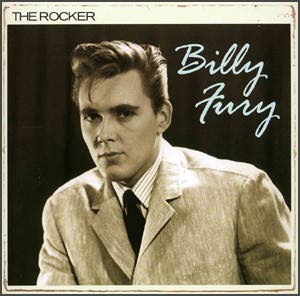
I guess my real question is: why Cliff? It comes down to the UK sensibility I suppose (at this time he was trying to break the US but didn't spend enough time there to really have an impact), the UK preferring their own nice boy to the rougher types, including one man I have yet to reach who was simply The Man when it came to rock 'n' roll at this time, a man so legendary that the Beatles (then called the Silver Beatles) tried and failed to be his backing band. Once you hear him, the original man in gold lame, the unfairness of Richard's success compared to his (at least on this blog) is inexplicable. But that is the teen idol business for you: the girls want who they want, and a pleasant vanilla milkshake was preferred over the crunchy tin roof sundae nearly every time.
Cliff Richard was a genuine teen idol in the UK in '60, singing directly to the girls in the audience here about how this was his first romance and how easily he could fall in love - though of course the song was objectively about young longings and hopes in general, especially on that crucial first date. I don't want to say that Richard was directly courting his audience here, but his coolness and silkiness - a kind of cat's eyes sound to his voice - certainly doesn't hurt.
My one question here is about teen idols in general - why did so many spring up at this time? Was it just because of sheer generational pressure - all the baby boomers hitting those crucial Tiger Beat times of lots of wall/locker space with so much room for posters? I suppose so - that mass media makes celebrities sounds like such an obvious answer that I am almost suspicious of it. Young people, girls in particular, have always had adolescent crushes of all kinds: royalty, movie stars, characters in books, portraits...all standing in for the real thing, helping them get to the stage where they are, in fact, ready for the real thing.
I guess my real question is: why Cliff? It comes down to the UK sensibility I suppose (at this time he was trying to break the US but didn't spend enough time there to really have an impact), the UK preferring their own nice boy to the rougher types, including one man I have yet to reach who was simply The Man when it came to rock 'n' roll at this time, a man so legendary that the Beatles (then called the Silver Beatles) tried and failed to be his backing band. Once you hear him, the original man in gold lame, the unfairness of Richard's success compared to his (at least on this blog) is inexplicable. But that is the teen idol business for you: the girls want who they want, and a pleasant vanilla milkshake was preferred over the crunchy tin roof sundae nearly every time.
Friday, November 20, 2009
Faraway In Time: Percy Faith: "Theme From 'A Summer Place'"
And now, as is almost always the way, a Canadian enters the number two scene with the most guileless, carefree breezy ease - Percy Faith was a bandleader who personified easy listening and this song certainly sums up the easy listening flutes-and-strings aplenty approach, one which works quite well with the rather torrid storyline of the movie A Summer Place; coolly seductive and yet coy, floating above the hubbub of emotionally complex lives, this song - which sounds much like a boat being set into motion from its moorings down a placid stream - is not just sexy because it's the soundtrack to Troy Donoghue and Sandra Dee falling in love (and making love, for that matter). It is sexy because it brings a certain openness to itself; not since Dean Martin has a song been so...there and yet not there. Dare I say the song almost laughs, in its pink chiffon way, at the tribulations (the sensations) in the story? Well, this is still the time of relative innocence in this decade and a time for looking back, in the dead of winter, to the heat of summer and its simple joys. A boy and girl fall in love, they are the future; problems are eased and there is a happy ending, despite all indications. The world responded in kind to this and made it a kind of anthem of hope, if I can put it that way, for a whole new decade; slow dancing and swaying to the music, eyes closed.
Subscribe to:
Posts (Atom)

 Posts
Posts