Easter 1973 was perhaps the first one I remember; I had the chicken pox and was confined to my bed, while my father went off to this place called Canada for a job interview. It was sunny and warm in L.A., I was hot and itchy and felt weird - weird to look at my skin, and weird that I knew that if he was successful, we would be moving pretty soon. The undifferentiated chunk of my early formative life in Los Angeles, in Silverlake in particular, would be ending, the future unknown (not that I thought much about 'the future' as such back then). When he came back, he brought me a concave plastic toy - shiny silver, with a green rubber ball suspended in the middle, so I could move it around and notice the reflections in the concavity...(my father wasn't much for presents).
At the time I had no idea about David Bowie, as I've said before; but I can imagine there was a whole horde of kids in the UK who also felt weird, as if their own skin was strange, and who latched on to Bowie with that same feverishness I felt; if following T.Rex was like an ecstatic experience, then Bowie was more a contagion, something that took you over and left its marks, for good or bad. This song (#2 on the Luxembourg chart) from Aladdin Sane has the strangeness of something you know is bad for you, maybe even corrupting; but it is done so well that hardly matters.
It is hard, especially in these renewed days of Bowie fever, to cast any light on this song that hasn't already been shone; save to say how even on a train from Seattle to Phoenix (he didn't like to fly - still doesn't I guess) he is still determinedly English; let Elton John and Bernie Taupin sing about America, Bowie guesses that the young creatures of the future are going to be Anglophiles into Mick Jagger and Twiggy, not Marilyn Monroe or Roy Rogers. These young folks have to learn the arts of romance, so to speak; and thus go to see movies and learn how they are done. Yes, in the dystopia to come, even normal instincts are lost; or perhaps the apocalypse has made them unnecessary, until now...I don't know if the love in this song is real or not; or perhaps the love for cinema is stronger than the actual 'love' made in and around the song itself. This is a concave world folding in on itself, the music a complex doo-wop*, Bowie's voice climbing and noting, gaining footholds, sympathetic (I think) to these hapless ravers, who are bumbling in the dark, so naive they have to read books and consult friends. That this is normal adolescent behavior and doesn't need a post-apocalyptic setting to work is the secret of this song; teenagers will be clueless no matter what fall out may be around. It is the music that is the most strange thing; I suspect that is why Mott the Hoople turned it down - Bowie gave them first dibs - and their rejection of it upset Bowie. I am not sure Ian Hunter would have liked singing about "Jung the foreman" or "Astronette 8" and would have no idea what "Sylvian**, The Bureau Supply for ageing men" meant. (Hm, maybe it's the lyrics and the music together...) The entire effect is one of a kind of decadence, wherein figures from the 60s are in a 70s-style doo-wop song sung from the point of view of someone looking back on a post-apocalyptic future adolescence. Whew!
This is audio pop-art, the kind I remember being full of noise, lights, machines with personalities; I remember seeing a show like this at the time and being alternately thrilled by it and a little scared too. That is as close to my reaction to Bowie would have been at the time - that this was maybe a little too grown up for me, that there were a lot of symbols and ideas going right over my head, ones I wouldn't have a clue about one way or another. In the spring of 1973 Bowie was, as the V&A show no doubt says, influencing people; asking them, with this song, to consider the eternal verities and warn them of nostalgia, of relying too much on Jagger and Twig the Wonder Kid for glamour - for propping a whole culture up on the 60s in essence, the effective continuation of life itself on a video or two.
That people are clamoring for Bowie now at the V&A is ironic as far as this song is concerned; I think it is right to view the past in context, but the right context is to hear the whole chart for this time to note how utterly different Bowie (and T.Rex and Roxy Music) were to everything else; strange and thrilling and a little scary. (The V&A show strikes me, who will probably never see it, as one of itchy idolatry - the overheated reaction to it and his new album show that the contagion still exists, a benevolent one of course, but one that leads to things like zig-zag earrings and "David Bowie Is Turning Us All Into Voyeurs***" buttons isn't always a good thing.)
Still, this is the tacky, awkward post-apocalypse of romance; teenagers are going to manage with whatever is left, the 50s/60s merging into a past that is only of some help. For those who felt out of step, odd in their own skin, Bowie was there to reassure them; but for others, those who didn't have to rehearse any lines or read books because their hormones were on fire - well, that's what I'm getting to next.
*Add to this confusion a performer who is very much English trying to do an American style of music - in hearing this I wondered if Bowie had ever even been to a drive-in. Methinks not.
**I have no idea if David Sylvian got his last name from this song, but then again he was 15 at the time, so he probably did, unless it was the New York Dolls' Sylvain Sylvain first.
***Voyeurs of what? "David Bowie Is Watching You" is the t-shirt for the show; all this watching, directly or surreptitiously, sounds like one ugly game of hide and seek. It also makes me wonder how this figure of the future knows about what the kids are doing...why is he so interested? Cough.
Showing posts with label kids these days. Show all posts
Showing posts with label kids these days. Show all posts
Tuesday, April 2, 2013

Friday, December 21, 2012
Green Bubblegum: The Osmonds: "Crazy Horses"
As many of you who read me will know, I was far too young to
be caught up in the whole fanatical David Cassidy vs. Donny Osmonds/The Osmonds
imbroglio, and in coming to think of it I doubt that even if I was the right
age, I would have been all that interested; neither are my type. So I can write here with some objectivity
about this rivalry, mainly that it was an ersatz Cowsills vs. the white Jackson
5 and that this is how the 60s were evolving into the 70s. This is odd in retrospect, and produced some remarkable singles.
One of them was this song – the only hit song in a genre
full of car worship to be actively against
them. The environmental movement –
pardon me, the ecological movement – was still fresh at this time and it mainly
looked at everything and said that it was polluted. Visual pollution, noise pollution and a host
of variants were all in the news, perhaps to distract from something else in
American life? The still-going Vietnam
war, perhaps, or…something happening right there in D.C. itself? The car – in my experience the early 70s car
was a huge station wagon or a big hulking thing that used a lot of gas, took up
a lot of space (I think of the car Cannon
used to drive around) and was a kind of symbol of US dominance. In our own family we had a French car, a
Renault 16, which my father bought as he was tall and needed the legroom, plus
it was French and that always counted
for something with him. There were
compact VW beetles that were noisy and reliable and got good mileage, not to
mention VW vans, but for Americans a car was a second home by now, and the
roomier and sleeker, the better.
So it is a surprise to hear these clean-cut Mormons talking
about the insanity of cars, their never-ending proliferation and how many there
are and how many more there will be.
This was before the oil crisis, before the gas guzzlers were traded in
for the smaller cars (the Pinto being one that, um, didn’t last) – so this is
actually a prescient call for a more reasonable way of getting around, if not
giving up driving a car for good and using some other means of
transportation. The US was about to
haplessly go into a period of confusion and recession and general breakdown the
likes of which had never been contemplated; faced with such big problems, they
started to take little things seriously, perhaps realizing that in fact they
weren’t that little to begin with. In
the 70s the personal became the political (and after assassination after
assassination and Vietnam dragging on, that attitude is understandable) and
everyone can agree on the importance of clean streets*, bald eagles and ‘Turn
down that music, if that’s what you call music.’ Indeed in retrospect this aspect of the 70s
is the one that has had the biggest effect (outside of various liberation
movements) in making the modern world the bicycle-friendly pesticide-free
use-your-own bag no artificial anything paradise it is today. (Cough.)
The horses are still out there (SUVs, for the most part) and they are
still crazy, even if going at the 55mph speed limit, which in my experience is
about how fast they can go without losing traction.
If anyone is reading this wants to know, I don’t drive, I
don’t know how to drive (terribly glamourous I know) mainly because my spatial
relations w/r/t a car/van/truck would be useless; I bump into enough
pedestrians as it is and would no doubt bump into vehicles too, and seeing how
other drivers drive here in London (either in a slackerly way as if it’s a
Sunday or in a way that can best be described as ‘opportunistic’) doesn’t make
me confident I could learn here either.
(My main spatial skill as such is map-reading; I am a born navigator, as
is my mom, who never got her licence, as driving in Silverlake
is…scary**.) But I digress…
Apart from the ecological aspects, this was and is a rockin' song in the best sense; loud, weirdly noisy (that horse's neigh done by Donny Osmond himself and later sampled by Pop Will Eat Itself for their epic "Def Con One" and just plain exciting in a way that a little kid could understand. This is rock 'n' roll just as much as any of the big Four, and by itself it fully justifies the Osmond mania of the time (complete with the band having to be smuggled in to the Top of the Pops studios to perform it). I would love to hear Neil Young cover it.
Next up: what is he
saying? Steve McQueen? What?
*A lot of environmental songs from this era have other
meanings in them, such as the Philadelphia All-Stars’ “Let’s Clean Up The
Ghetto” which about a lot more than beautifying your block by planting a
garden, though it’s about that too.
**Those of you who know how hilly it can get know what I’m
talking about. Imagine being at the very
top of Baxter Drive and feeling the ground give way and you can see why my mom
said ‘no thank you.’ I was in the
backseat at the time, of course (and this was in 1972).
Monday, September 20, 2010
Dance Craze Predicts Future: Chubby Checker: "Let's Twist Again"
There were, of course, those who didn't have much interest in jazz of either a death-defying or contemplative nature; which is to say, the angst of the early 60s was something easily avoided by a new dance craze: the Twist. Why think about possible nuclear war, the situation in South Africa, this new war in a place called Vietnam...when you could just move your body back and forth, with or without a partner? If there is any song that marks the definitive beginning of the 60s (at least in this blog's remit), here it is - sung by Checker as a long encore, as if it's the real beginning of a party that is maybe about to get way out of hand ("Is it a bird, is it a plane? It's a Twister!" he cries, as if sufficient twisting could make you fly) with no way down, no way out. And indeed at the time the dance spawned many others, but it mostly spread like a virus across all classes and nations, until it was pretty much the case that it was the new hip thing, for young and old, royalty and sweaty teenagers giving it their all despite parental disapproval. The twist was the first rock 'n' roll dance, a dance that came out of the famed Peppermint Lounge, which was a place to dance to records: a discotheque. Thus another craze was born on the side: going somewhere to dance to recorded music amongst any number of people, famous and infamous, to do the latest dances and hear the hot records. (Of course people danced to records before this; I always imagine kids going crazy around a jukebox, or even dancing in their car, should they be lucky enough to get a hold of one.)
The song itself is as basic as the dance, Checker is jolly and a little scary too (as if, if you don't dance, he will come over and make you dance); seeing as how there were at least two other twist songs in the chart at this time, I can imagine how some kids were probably wondering what on earth could be better than this; without giving much away I would argue that the very best twist song was the last big one, which acted as a springboard for a group we have yet to encounter. (Those of you who can't stand the suspense can click here.) Hello, 1960s, and hello, the future.
The song itself is as basic as the dance, Checker is jolly and a little scary too (as if, if you don't dance, he will come over and make you dance); seeing as how there were at least two other twist songs in the chart at this time, I can imagine how some kids were probably wondering what on earth could be better than this; without giving much away I would argue that the very best twist song was the last big one, which acted as a springboard for a group we have yet to encounter. (Those of you who can't stand the suspense can click here.) Hello, 1960s, and hello, the future.
Monday, November 23, 2009
We Love You Cliff, Oh Yes We Do: Cliff Richard And The Shadows: "Fall In Love With You"
If there is one dynamic in popular culture that can always be relied upon, it is that of the teen idol. Young, shiny, handsome/pretty, unthreatening - a teen idol is by necessity accessible (yet slightly mysterious), humble and obliging, one of those obligations being that they take up only so much time and trouble in popular culture. Teen idols can grow up and continue to be successful in what they do, mainly because they change as their audience changes; or they can break up (if a band) or wander off into other things, such as politics, business or other arts. However I am guessing many teen idols either go on as they believe they can serve the industry or they are a little tired of being screamed at and retreat and are able to reinvent themselves.
Cliff Richard was a genuine teen idol in the UK in '60, singing directly to the girls in the audience here about how this was his first romance and how easily he could fall in love - though of course the song was objectively about young longings and hopes in general, especially on that crucial first date. I don't want to say that Richard was directly courting his audience here, but his coolness and silkiness - a kind of cat's eyes sound to his voice - certainly doesn't hurt.
My one question here is about teen idols in general - why did so many spring up at this time? Was it just because of sheer generational pressure - all the baby boomers hitting those crucial Tiger Beat times of lots of wall/locker space with so much room for posters? I suppose so - that mass media makes celebrities sounds like such an obvious answer that I am almost suspicious of it. Young people, girls in particular, have always had adolescent crushes of all kinds: royalty, movie stars, characters in books, portraits...all standing in for the real thing, helping them get to the stage where they are, in fact, ready for the real thing.
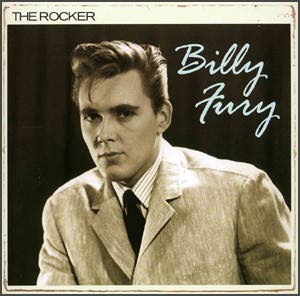
I guess my real question is: why Cliff? It comes down to the UK sensibility I suppose (at this time he was trying to break the US but didn't spend enough time there to really have an impact), the UK preferring their own nice boy to the rougher types, including one man I have yet to reach who was simply The Man when it came to rock 'n' roll at this time, a man so legendary that the Beatles (then called the Silver Beatles) tried and failed to be his backing band. Once you hear him, the original man in gold lame, the unfairness of Richard's success compared to his (at least on this blog) is inexplicable. But that is the teen idol business for you: the girls want who they want, and a pleasant vanilla milkshake was preferred over the crunchy tin roof sundae nearly every time.
Cliff Richard was a genuine teen idol in the UK in '60, singing directly to the girls in the audience here about how this was his first romance and how easily he could fall in love - though of course the song was objectively about young longings and hopes in general, especially on that crucial first date. I don't want to say that Richard was directly courting his audience here, but his coolness and silkiness - a kind of cat's eyes sound to his voice - certainly doesn't hurt.
My one question here is about teen idols in general - why did so many spring up at this time? Was it just because of sheer generational pressure - all the baby boomers hitting those crucial Tiger Beat times of lots of wall/locker space with so much room for posters? I suppose so - that mass media makes celebrities sounds like such an obvious answer that I am almost suspicious of it. Young people, girls in particular, have always had adolescent crushes of all kinds: royalty, movie stars, characters in books, portraits...all standing in for the real thing, helping them get to the stage where they are, in fact, ready for the real thing.
I guess my real question is: why Cliff? It comes down to the UK sensibility I suppose (at this time he was trying to break the US but didn't spend enough time there to really have an impact), the UK preferring their own nice boy to the rougher types, including one man I have yet to reach who was simply The Man when it came to rock 'n' roll at this time, a man so legendary that the Beatles (then called the Silver Beatles) tried and failed to be his backing band. Once you hear him, the original man in gold lame, the unfairness of Richard's success compared to his (at least on this blog) is inexplicable. But that is the teen idol business for you: the girls want who they want, and a pleasant vanilla milkshake was preferred over the crunchy tin roof sundae nearly every time.
Saturday, December 13, 2008
It Came From The Basement: Lonnie Donegan: "Lost John/Stewball"
If the previous entry had a woman at its centre – sitting late at night by herself, listening to a record – then here we have a different venue and a different attitude. At momentous times like this, it’s good to look at the surroundings and see what is up.
The charts look like they are not just at a crossroads, but are at a place where two rivers meet. It is dangerous, I feel, to say that the one river is more ‘natural’ or ‘spontaneous’ than the other; there is only so much credit I can give for ‘authenticity’ or ‘purist’ qualities, these being at the very heart of music which may well be good, but which lacks a vital something – you might call it punctum – once it exhausts whatever innate qualities it has.
That is why the transatlanticism (thank you, whoever coined that word) of 50s music matters so much. Already on this blog there have been many US as well as UK artists; any idea that Americans suddenly ‘invaded’ the UK charts with rock ‘n’ roll must be put aside. As an American myself, I find it strange to read the story of Lonnie Donegan reviving a fairly casual and homey music – skiffle – and being so successful; but it is often in the strange that something new can happen. Much has been made of Donegan’s being from the UK and making simple, direct and easily playable music as being a cornerstone of what is to come; but staying in the here and now (June 1956), a great deal is happening, and “Lost John/Stewball” (songs about a prisoner and a racehorse) has gone up the charts, amidst movie themes, instrumentals and a song improbably called “Rock and Roll Waltz” – a clear indicator that this new thing is at least worth a dance, even if said dance is all wrong. (Just as “Rock Around The Clock” is described as a ‘foxtrot’ to those unable to jive and swing.) Lonnie’s woebegone narratives, delivered with a voice like cheery 5th grade teacher who wants the whole class to join in (and thus, they do) are not aimed at those who know dances, or have aspirations to sing with full orchestras. It is fairly clear that the teenager (that now no-longer mythical creature, if s/he ever was) is starting to buy singles and hang out in clubs like The Two Is and others where skiffle is played. Acoustic guitars are bought; bands are formed; but this has yet to happen. Lonnie Donegan has his foot in the door and a young man – even younger than Lonnie – is about to rip the door down altogether.
(Let me now also pause and note that Donegan is from Glasgow, Brewer is American, and how nice it s to have them together, just as Marcello and I will soon be together in London.)
The charts look like they are not just at a crossroads, but are at a place where two rivers meet. It is dangerous, I feel, to say that the one river is more ‘natural’ or ‘spontaneous’ than the other; there is only so much credit I can give for ‘authenticity’ or ‘purist’ qualities, these being at the very heart of music which may well be good, but which lacks a vital something – you might call it punctum – once it exhausts whatever innate qualities it has.
That is why the transatlanticism (thank you, whoever coined that word) of 50s music matters so much. Already on this blog there have been many US as well as UK artists; any idea that Americans suddenly ‘invaded’ the UK charts with rock ‘n’ roll must be put aside. As an American myself, I find it strange to read the story of Lonnie Donegan reviving a fairly casual and homey music – skiffle – and being so successful; but it is often in the strange that something new can happen. Much has been made of Donegan’s being from the UK and making simple, direct and easily playable music as being a cornerstone of what is to come; but staying in the here and now (June 1956), a great deal is happening, and “Lost John/Stewball” (songs about a prisoner and a racehorse) has gone up the charts, amidst movie themes, instrumentals and a song improbably called “Rock and Roll Waltz” – a clear indicator that this new thing is at least worth a dance, even if said dance is all wrong. (Just as “Rock Around The Clock” is described as a ‘foxtrot’ to those unable to jive and swing.) Lonnie’s woebegone narratives, delivered with a voice like cheery 5th grade teacher who wants the whole class to join in (and thus, they do) are not aimed at those who know dances, or have aspirations to sing with full orchestras. It is fairly clear that the teenager (that now no-longer mythical creature, if s/he ever was) is starting to buy singles and hang out in clubs like The Two Is and others where skiffle is played. Acoustic guitars are bought; bands are formed; but this has yet to happen. Lonnie Donegan has his foot in the door and a young man – even younger than Lonnie – is about to rip the door down altogether.
(Let me now also pause and note that Donegan is from Glasgow, Brewer is American, and how nice it s to have them together, just as Marcello and I will soon be together in London.)
Subscribe to:
Posts (Atom)

 Posts
Posts